
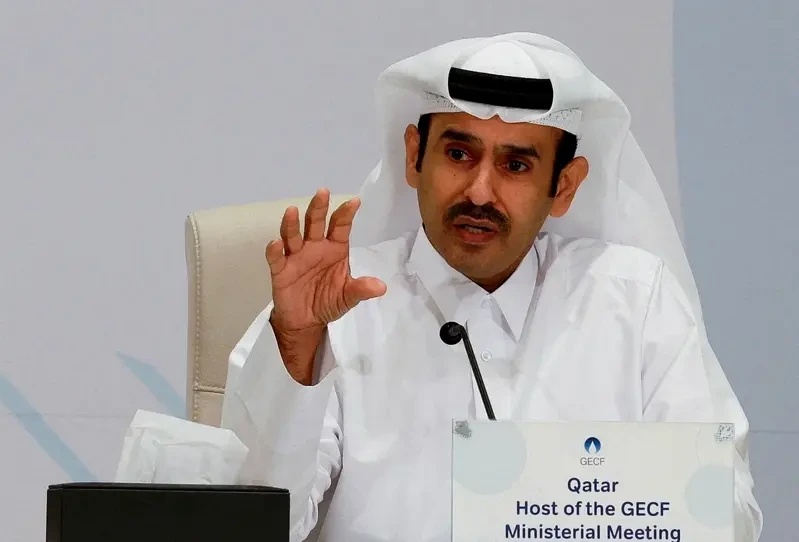
Qatar’s Energy Minister, Saad al-Kaabi, publicly disputed U.S. Treasury Secretary Scott Bessent, calling Bessent’s claim that the Strait of Hormuz would lose its value within two years a misjudgment.
Speaking at the Qatar Economic Forum in New York on the 20th, al-Kaabi acknowledged that while that might be Bessent’s view, “I think it is completely wrong.”
Earlier this month, on the sidelines of the G20 meeting of finance ministers and central bank governors in the U.S., Bessent stated that Gulf nations were building onshore oil pipelines to bypass the Strait of Hormuz, predicting that within two years, the strait would become “a worthless body of water.”
Al-Kaabi, who also serves as the CEO of QatarEnergy, noted that beyond oil and gas, the Strait of Hormuz is a vital shipping lane for a wide range of commodities and cannot be rendered obsolete.
He emphasized that should such claims arise again, “I can reiterate to anyone that I do not believe the Strait of Hormuz will ever lose its utility.”
Qatar’s Minister of Commerce and Industry, Sheikh Faisal Al-Thani, also remarked that since approximately 90% of global freight moves by sea, the Strait of Hormuz cannot become irrelevant; the real issue lies in how to diversify transport risks.
Saudi Arabia is accelerating investment in Red Sea ports, and the United Arab Emirates is advancing a multi-billion-dollar “Zero-Hormuz” initiative to find alternative routes. However, al-Kaabi stated that, based on commercial and technical considerations, Qatar has decided against building new pipelines to bypass the Strait of Hormuz and will continue to utilize the waterway.
Disruptions to shipping in the Strait of Hormuz have also slowed Qatar’s liquefied natural gas (LNG) expansion plans. Al-Kaabi indicated that the first LNG production train at the North Field East project is now expected to come online in the first half of 2027, a delay from the original 2026 target. The second phase, North Field South, is slated for 2028, though subsequent production lines could face further delays if equipment cannot be delivered via the Strait of Hormuz.