
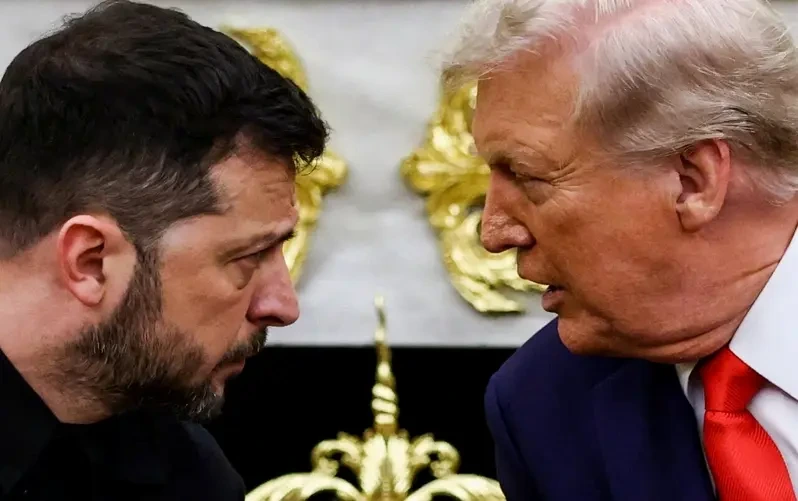
The political news site Axios reported that on the 11th, U.S. President Trump unexpectedly announced an “energy ceasefire” between Russia and Ukraine. However, neither side appeared to have reached a prior consensus; in fact, Russian forces launched attacks on power plants within Ukraine just hours later. White House officials subsequently explained that Trump was referring to a ceasefire proposal still under discussion—one to which Russia had not yet agreed—whereby a halt to attacks on oil refineries could pave the way for a future agreement to stop targeting power plants and energy grids.
Meanwhile, the Financial Times reported on the 11th, citing European officials, that the U.S. was contacting Ukraine and European nations to urge Kyiv to stop attacking Russian oil refineries. The U.S. warned that failure to do so could jeopardize access to American weapons procured through NATO’s “Prioritised Ukraine Requirements List” (PURL) mechanism or even lead to a halt in intelligence sharing. A person who received a call from a U.S. defense official described the situation by saying, “They are calling Kyiv… and they are calling everyone in Europe.” The White House declined to confirm or comment on these calls.
The events were triggered by an interview Ukrainian President Volodymyr Zelenskyy gave to ABC News on the 11th, in which he stated that Ukraine would be willing to stop attacking Russian oil refineries if Russia ceased its attacks on Ukrainian energy infrastructure. He also suggested that if Russian President Vladimir Putin agreed to a comprehensive 60-day ceasefire, Ukraine could hold presidential elections.
Trump subsequently made a sudden announcement on his social media platform, Truth Social: “An energy ceasefire in the Russia-Ukraine war is effective immediately. Both sides have agreed. No violations allowed!”
However, Zelenskyy stated bluntly that Trump’s announcement of a ceasefire was “news to me as well,” and a senior Ukrainian official told the Financial Times that “no one has heard of this ceasefire agreement”—noting that maintenance crews in Kyiv were actually in the midst of emergency repairs on power and water facilities damaged by Russian attacks at the time.
A White House official explained to Axios that Trump was referring to a “refinery-for-refinery” ceasefire proposal, requiring both Russia and Ukraine to halt attacks on each other’s oil refining facilities, with the possibility of later expanding the agreement to include power plants and energy grids. Trump expects Zelenskyy to abide by this arrangement, though Russia is still weighing whether to accept it. The official stated, “We will soon know if the Russian side is prepared to agree.”
However, the proposal is not reciprocal for the two sides. Ukrainian officials point out that Ukraine has only one oil refinery—which has been repeatedly attacked by Russian forces and is currently not fully operational—whereas Russia possesses a vast network of refineries. The official emphasized, “We rely on imports for both diesel and gasoline. What we really need is for Russia to stop attacking our power grid.”
Trump, having just reached an agreement with Russia on the 9th to ease diesel sanctions, is now pressuring Ukraine to halt attacks on Russian refineries, believing that the Ukrainian strikes are driving up U.S. gasoline prices. White House officials have warned that Ukraine’s attacks on Russian refineries risk damaging the relationship between Zelenskyy and Trump even more than they harm Russia.
A White House official revealed, “Trump is truly furious. He feels that Zelenskyy is taking U.S. support for granted.”